

Programme watercircle.be - VMx
Technology & Legislation: solutions or stumbling blocks?
(In Dutch / English)
(In Dutch / English)
Willy Gils
watercircle.be
Sven Cuvelier
Desotec
In this presentation, Sven Cuvelier, an engineer at Desotec, provides in-depth insight into the affinity of activated carbon for triazoles and its use in removing them from water streams. He examines the key parameters that influence adsorption efficiency, including the specific properties of the water to be treated, such as its composition and level of contamination. He also looks at the sustainability of activated carbon as a treatment technology, focusing on service life, reactivation options and environmental impact.
Finally, he illustrates its practical applicability with a demonstration of a mobile filter unit.

Kwinten Van Eyck
Inopsys
Roel Boussemaere
Air Liquide
For a large pharmaceutical production site, Inopsys worked with Air Liquide to develop an on-site water treatment plant for the removal of 25 active pharmaceutical ingredients (APIs) from a complex wastewater stream. The plant combines physicochemical treatment, ozonolysis and specific adsorption, removing up to 99.99999% of the APIs without forming bromate or AOX. It has been operational since 2021 and brings API concentrations down below the relevant PNEC limits, delivering an energy-efficient, compact solution that offers a sustainable alternative to conventional technologies.
Korneel Caron
DuPont
How can wastewater treatment plants meet stricter nutrient standards when space and budget are limited and operations have to continue uninterrupted? This presentation looks at how MABR technology can be integrated into existing tanks to increase nitrogen and phosphorus removal capacity considerably, without taking the plant out of service.

Michel Danau
Veolia

Haroon Bhatti
Hach
This session explores how reliable, continuous water-quality data can support industrial operators as regulation becomes stricter, more transparent and more performance-driven.
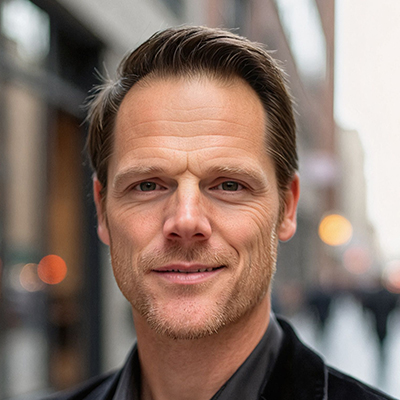
Stijn Wyffels
AM-TEAM
With substances of very high concern (ZZS) attracting increasing attention, water authorities and industry face new challenges in implementing a fourth treatment stage. Models and digital solutions can help throughout the process, from feasibility studies and pilot trials through to the design, optimisation and operational support of advanced quaternary water treatment plants.
In this presentation, we share practical experience and insights into how a well-considered approach leads to efficient, robust and future-proof removal of ZZS.

Kristof Van Acker
Witteveen+Bos
Reusing a company's own wastewater, or wastewater from third parties, is in many cases considered a way of meeting a (significant) industrial water demand. Set against the positive effects on the water balance, this usually also produces a more concentrated effluent. The load itself remains broadly the same, but the dilution factor is smaller and the impact in many cases greater. European legislation – and more specifically the way it is transposed within the Flemish context – means that beyond a certain level, surface water quality outweighs the positive water-efficiency gains in the assessment. Additional case studies will be discussed by way of clarification.
 Participate